
Searching for a Warrant in Montgomery County
Montgomery County publishes no public warrant database. So a reliable warrant check here means working several official channels, each answering one part of the question. Iowa Courts Online opens public district-court case records. The Montgomery County Clerk of Court confirms what a docket entry means, and the Montgomery County Sheriff covers service, custody, and bond routing.
- Search Iowa Courts Online by the full legal name or known case ID.
- Read the docket for an FTA, warrant order, bond, return, recall, or release event.
- Call the Clerk at 712-623-4986 to confirm the court-side status and next appearance instruction.
- Call the Sheriff at 712-623-5107 during published weekday office hours for agency-side confirmation.
- Request a specific existing record if those checks do not resolve the question.
Inside Red Oak city limits, Red Oak Police at 712-623-6500 may steer you to an agency record. Villisca, Stanton, Elliott, and Grant get sheriff service through 28E agreements. Iowa runs no separate municipal-court warrant portal, and the IOWA System stays closed to all but criminal-justice agencies.
Search Montgomery County Cases Online
The case-search route is statewide, though the live screen lets you narrow it to Montgomery County when that filter appears. Type the name exactly as the case spells it. A common name pulls up many records, so match the case ID, case type, filing date, and county before trusting any hit as yours. The official help allows as few as two letters of a last or firm name. The percent sign works as a wildcard too. The state case-search screen is the court's own docket gateway, and it opens directly for a public search. Treat it as a starting point, not a sheriff's warrant list.
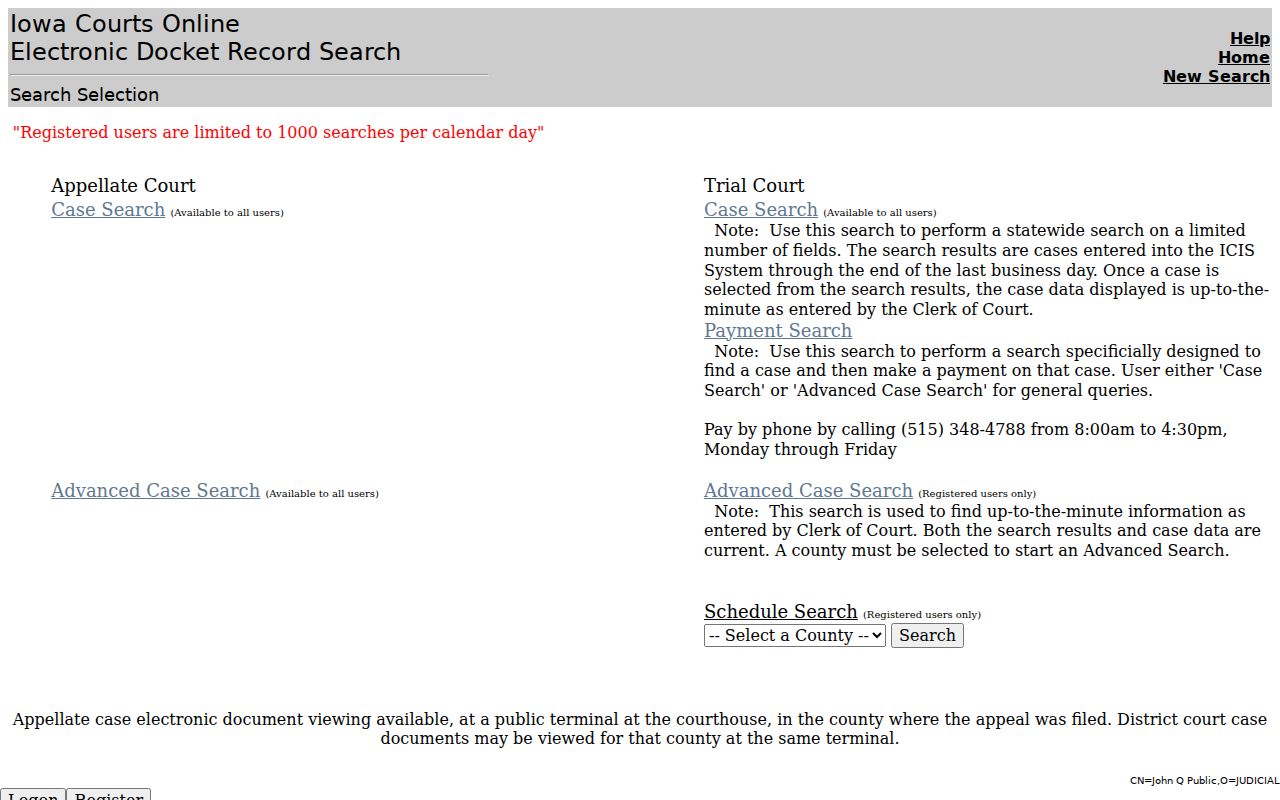
The frame is simply the official door into Montgomery County case records. Whatever it returns still needs status confirmation from the court.
Warrant Search Fields Explained
Iowa Courts Online offers no warrant-only field. Its public case filters help you find the docket that may hold a warrant event. Stick to the choices the current interface shows.
| Field label | Type | Required | Notes |
|---|---|---|---|
| Last or firm name | Text | Yes | At least two letters; % wildcard supported. |
| First name or initial | Text | No | Match court spelling. |
| Second name | Text/logic | No | AND/OR logic is documented. |
| Case ID | Text | No | Best for common names. |
| County | Filter | No | Select Montgomery when offered. |
| Date or case type | Filter | No | Use current displayed options. |
A birth date is not the usual public name-search key in Montgomery County. Share it only if office staff ask for it to sort records apart.
Montgomery County Clerk Confirmation
Docket text can prove a judge entered an order without giving a simple current-warrant flag. That gap is why a call matters. Reach the Clerk at 712-623-4986 or email CountyClerk.Montgomery@iowacourts.gov; the office sits at 105 E Coolbaugh Street in Red Oak. Give the case ID, name, and county. Then ask whether the docket shows an outstanding warrant, the issuing officer, a current appearance instruction, or a bond and release entry. The official county court page posts those public contact details.

The Clerk will explain the record route for Montgomery County but cannot release confidential material or give legal advice.
What a Warrant Search Shows
A public docket may show only part of a warrant-related record. Read the sequence of events, not the caption. The real question is whether a later order changed an earlier warrant event.
| Case ID | The court identifier, such as county case ID. |
|---|---|
| Warrant basis | A complaint, charge, probable-cause finding, or FTA. |
| Issuing court | Iowa District Court and its judicial officer. |
| Bond or release | An endorsement or later order, if public. |
| Service and return | Officer action and the reported result. |
| Later status | Recall, quash, release, or bond posted. |
Montgomery County publishes no warrant-number format or status legend. Ask the Clerk to interpret the exact current wording.
When Montgomery County Search Is Silent
A blank result is never a no-warrant certificate. A recent order may not be posted yet. Sealed filings, juvenile records, unexecuted arrest warrants, and active-investigation material can all be restricted from public view. And nothing in the law-enforcement-only IOWA System turns public just because you searched a Montgomery County docket.
Verify the gap: Call the Clerk for the docket and the Sheriff for service status before acting on a silent online result.
Red Oak Police can add local report context, but that never replaces court and sheriff confirmation of a warrant. In the five 28E communities, the Sheriff provides the documented service.
Where to Check Warrants in Montgomery County
Iowa District Court is the state's unified trial court. Magistrates there handle simple misdemeanors, scheduled violations, municipal infractions, preliminary matters, and authorized warrant work. District associate judges carry broader criminal assignments. Even a city ordinance or traffic case runs through this one system, since Iowa keeps no separate municipal court. The Clerk holds the court record. The Sheriff answers county service and custody questions, while Red Oak Police handles enforcement inside city limits. The IOWA System links agencies with NCIC, and its own state description confirms the network stays closed to public self-searching.
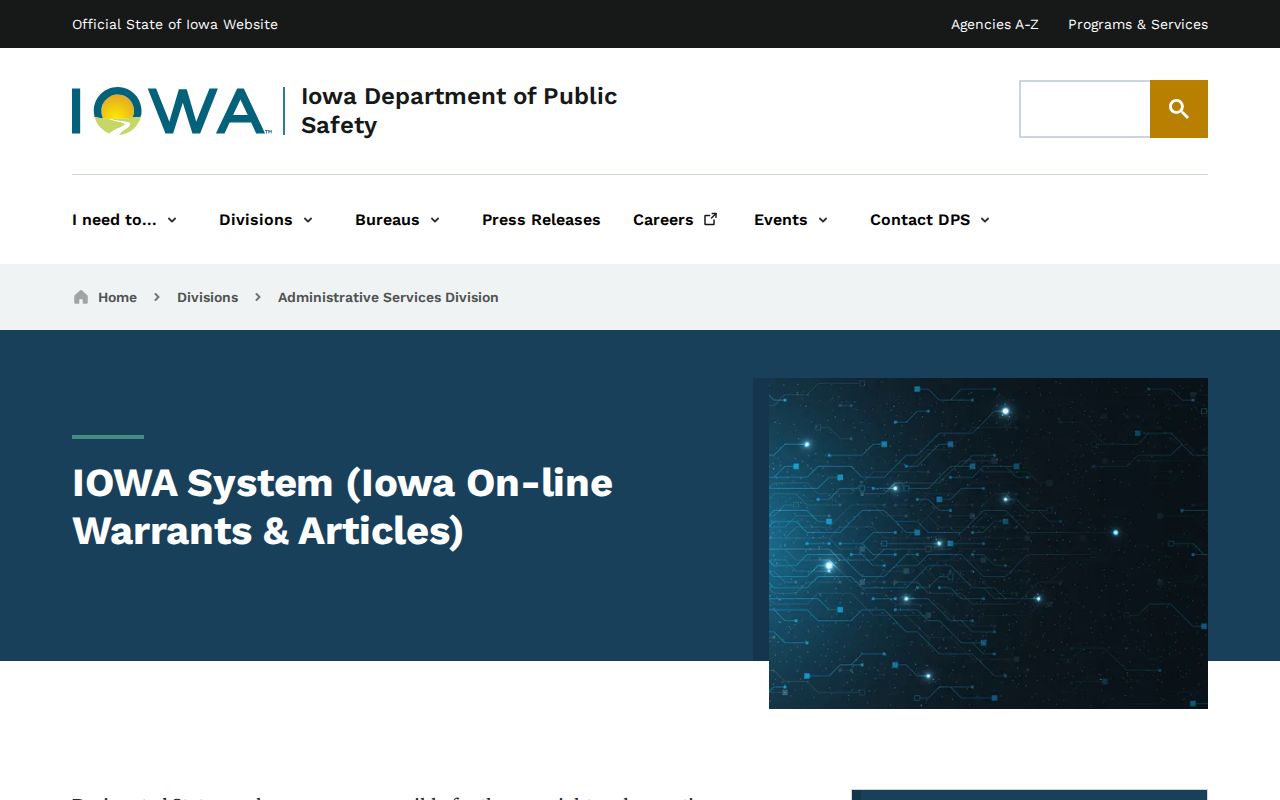
Public users should not mistake an agency network for an online warrant lookup.
Request Montgomery County Warrant Records
When routine checks fall short, request the specific record you need. Montgomery County sends requests to the department holding the material. If that department is unclear, call the Auditor's Office at 712-623-5127. Describe the record type, case number, court, date range, and format you want. Ask for a cost estimate when review, redaction, copies, staff time, or postage could apply. The public-information routing page spells out where each request belongs.
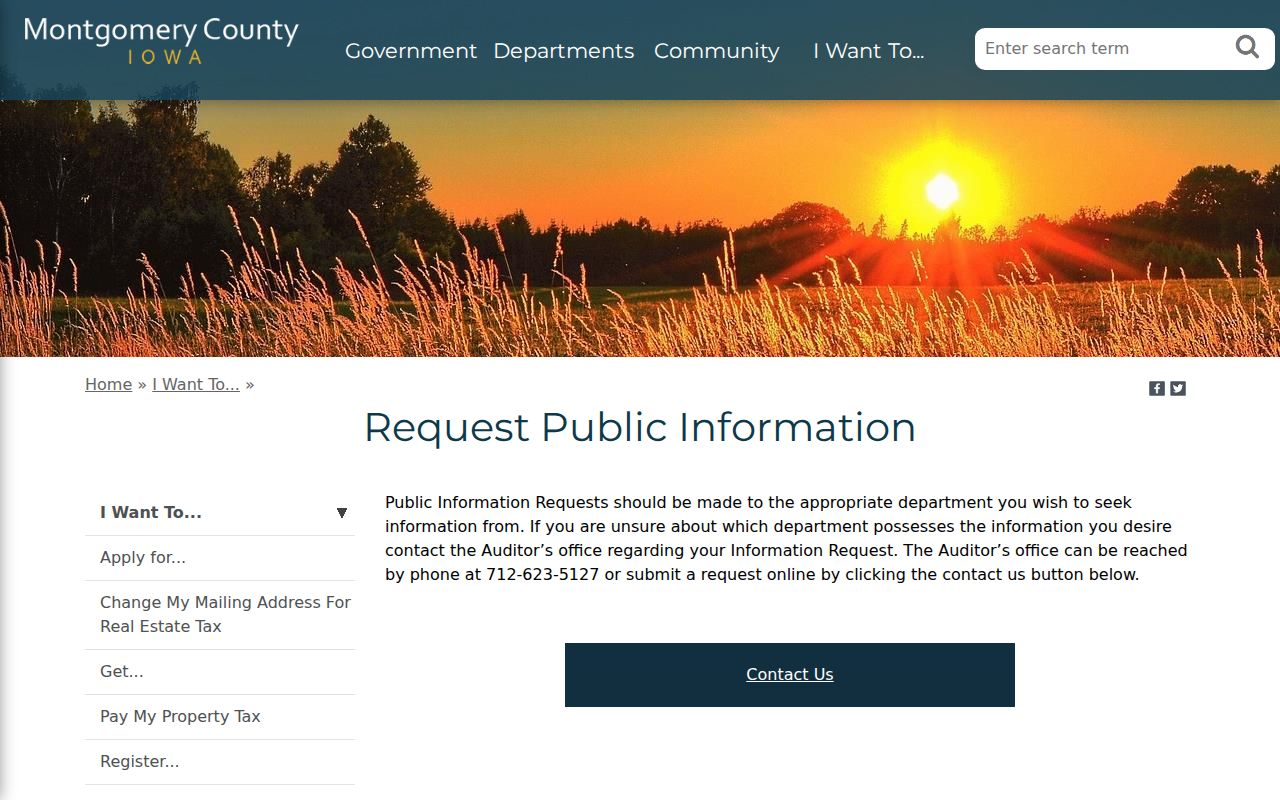
Montgomery County publishes no warrant form, fixed fee, tracker, or deadline. Chapter 22 does not require staff to build an all-warrants report.
Restricted Warrants and Access Rules
Iowa Code chapter 22 governs public records. Court rules and specific statutes control confidential judicial material, so access turns on the record and its stage.
Key access limits:
Unexecuted arrest and search warrant material can be restricted.
Juvenile files are limited under Iowa Code chapter 232.
Investigative and sealed material may be withheld.
Ask for any segregable public portion and the legal basis for withholding the rest. Court requests can be verbal or written, though complex work may need a written description.
Verify Montgomery County Scam Calls
Scam calls have reached Iowa, and Montgomery County residents should be alert. In June 2026 the Iowa Judicial Branch warned that impostors pose as court or police staff demanding money tied to fines, jury service, or an arrest warrant. Real courts never ask for Social Security numbers, prepaid cards, Bitcoin, or payment by text or phone, and officers do not collect court fines. The official scam warning spells it out.

Hang up and verify with the Clerk, local police, Iowa Courts Online, or 515-348-4788. A demand for instant payment is never proof of a warrant in Montgomery County.
Montgomery County Search Request Limits
Iowa Judicial Branch guidance allows estimated charges for copies, postage, retrieval, review, redaction, supervision, or programming. Montgomery County sets no fixed deadline for answering a warrant records request. So make your ask concrete. Describe an existing order or a docket event. Ask what you can view at a public terminal. That focus hands staff a specific record to pull, not a name to investigate or a new database to build. If part of the warrant record is withheld, request the public portion and the rule or law supporting that decision. Detail matters here. A clerk needs enough to separate one warrant order from a full case file. Keep the date range narrow. Name Montgomery County and give the case ID if you know it.