
Montgomery County Municipal Court Warrants
Iowa keeps this simple. No city here runs its own court. The 1973 Unified Trial Court Act folded municipal, justice, and mayor courts into Iowa District Court, and that structure governs Montgomery County. Judicial magistrates now hear scheduled violations, simple misdemeanors, and municipal infractions. Harder cases go to district associate judges and district judges. A warrant tied to a city citation is a District Court record. So where does 'municipal warrant' fit? It is a search phrase only. Miss a required appearance, and a bench warrant can follow under Iowa Rule of Criminal Procedure 2.7(4). Failure to appear on a citation can itself be a simple misdemeanor, which opens the way to an arrest warrant under Iowa Code section 805.5. Iowa sources say 'bench warrant.' The Texas term 'capias pro fine' does not travel to Montgomery County.
Montgomery County's Unified Court History
The 1973 change closed Iowa's separate lower courts. The Iowa Judicial Branch court history explains that unification and why Montgomery County has no city-court docket to search.

One court means one record route. Montgomery County cases run through Iowa Courts Online and the Clerk, even when an incident began inside city limits.
Montgomery County Cities With Municipal Courts
No Montgomery County community runs its own municipal court. Every city here uses the unified state court and local agencies instead.
| City | Court route | Agency route | Likely matters |
|---|---|---|---|
| Red Oak | Iowa District Court | Red Oak Police; sheriff as needed | City citations, traffic, infractions |
| Villisca | Iowa District Court | Sheriff under 28E | Citations, FTA, misdemeanors |
| Stanton | Iowa District Court | Sheriff under 28E | Citations, FTA, infractions |
| Elliott | Iowa District Court | Sheriff under 28E | Citations and court events |
| Grant | Iowa District Court | Sheriff under 28E | Citations and court events |
Coburg is the sixth community. It is served by the Montgomery County Sheriff as well.
Red Oak Municipal Warrant Routing
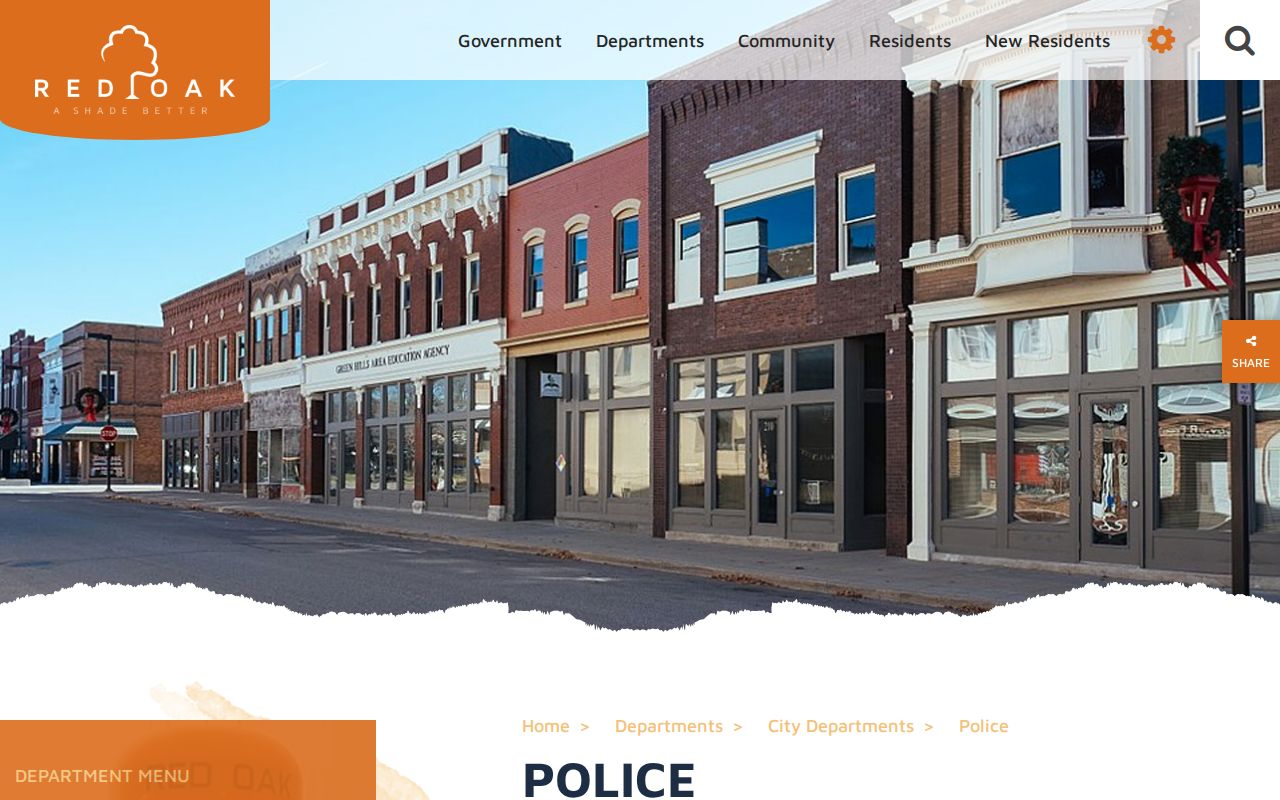
Red Oak has its own police force. It is the only Montgomery County town with one. The Red Oak Police Department polices inside city limits and backs up the sheriff. Non-emergency calls go to 712-623-6500. Administration answers at 712-623-6501. Those numbers suit police reports and city-limit incidents, but the department posts no warrant portal, and Red Oak has no municipal court.
The records split by agency. Police reports stay with police, while the warrant docket and court instructions belong to the Montgomery County Clerk.
Checking a Municipal Court Warrant
No city warrant database exists. So work a chain, and bring a legal name, date of birth if known, case or citation number, and the approximate event date to any Montgomery County warrant check.
- Search official Iowa Courts Online by case ID or name.
- Call the Clerk at 712-623-4986 to confirm the docket, appearance, payment status, warrant event, or next step.
- For Red Oak police records, call Red Oak Police. For service or custody countywide, call the sheriff at 712-623-5107 during published weekday hours.
- Request an existing county record from the responsible department under chapter 22. The Auditor at 712-623-5127 is the uncertainty fallback.
- Ask a lawyer or the court how to proceed before an unannounced walk-in because no bond window or safe-surrender policy is published.
Montgomery County Portal Myths
A blank search is not proof that no warrant exists. Montgomery County publishes no active-warrant list. The IOWA System is for law enforcement only. Some records stay withheld. Unexecuted warrants, juvenile files, sealed material, and active-investigation records fall in that group, and Iowa Courts Online is a public starting point rather than a promise that every agency status appears.
Key distinction: a city utility page, anonymous-tip form, or City Hall contact is not a warrant lookup or court-payment channel.
Inside a Municipal Court Warrant
A docket names the file and the event behind a warrant. The warrant itself may not show. Old lines can shift meaning as the court acts, so read each entry in context and confirm it with the Montgomery County Clerk.
| Case or citation number | The official identifier, such as SMCR or scheduled-violation case ID, when public. |
|---|---|
| Subject name | The court party name; use more than a name alone to avoid a false match. |
| Case type | May identify a scheduled violation, simple misdemeanor, municipal infraction, or other matter. |
| Issuing court | Iowa District Court in Montgomery County, not a separate city court. |
| Docket event | An appearance, FTA, warrant order, return, recall, or payment entry when public. |
| Bond or fine | Only an amount shown or confirmed by court; no general local schedule was found. |
| Status | Verify with the Clerk or agency because public information can lag or be restricted. |
Villisca's 28E Warrant Route
Villisca has a 28E agreement. The city code records sheriff law-enforcement services, with copies kept at the city Clerk, the county Recorder, and the Secretary of State. That contract says who patrols. It creates no Villisca court, sets no bond, and spells out no surrender process. City Hall answers agreement questions during its split weekday hours. A Villisca citation that reached court stays on the Montgomery County docket with the Clerk. Service and custody belong to the sheriff. Keeping those lanes apart stops a contract request from being mistaken for a warrant-status check.
Montgomery County Municipal Warrant Terms
A municipal infraction is a city-code matter. The unified District Court hears it. A scheduled violation follows Iowa's scheduled-violation process, and 'FTA' means failure to appear, which can trigger a bench warrant or the section 805.5 process in Montgomery County.
- Judicial magistrate
- A District Court officer whose jurisdiction includes scheduled violations, simple misdemeanors, and municipal infractions.
- Bench warrant
- An order issued by the court, commonly after a required appearance is missed.
- IOWA System
- Iowa On-line Warrants and Articles, an agency network linked with NCIC and closed to public searches.
- Recall
- A later court action withdrawing a warrant, which should be confirmed on the current docket.
How to Resolve a Municipal Warrant
Resolution follows the court's current order, not city policy. Paying a fine does not answer the recall question. The Judicial Branch notes that some delinquent court debt must go through the county attorney. Confirm the Montgomery County sequence before you pay or appear.
- Verify the correct case and current warrant event with the Clerk.
- Ask whether payment, a scheduled appearance, motion, bond, or another step is required.
- Use only the official Judicial Branch payment route when eligible and retain the receipt.
- Ask the sheriff about service or custody logistics if the court says the warrant remains active.
- Confirm the docket reflects recall or satisfaction rather than assuming a transaction cleared it.
Before appearing: Montgomery County publishes no walk-in surrender rule or fixed bond window, so confirm current instructions first.
Montgomery County's Coolbaugh Offices
The Montgomery County Clerk sits at 105 E Coolbaugh Street in Red Oak. The sheriff's Law Enforcement Center is across at 106 W Coolbaugh Street. The addresses nearly match. The duties do not. The Clerk holds the docket and court instructions, while the sheriff takes service and custody questions. The Judicial Branch county page posts the official Clerk contact and courthouse access details.

The courthouse is the reference for docket questions. The nearby Law Enforcement Center is the separate Montgomery County agency route.
An older docket view cannot establish current status. Only fresh confirmation shows whether a Montgomery County warrant was served, returned, recalled, sealed, or restricted by the court.